Why Research Teams Should Move From “Projects” to “Programs”
I recently had the chance to stand on stage at Quirk’s New York with Traver McLaughlin, VP, Programs and Professional Engagement Marketing from the American Diabetes Association (ADA), and talk about a partnership that’s shaped how I think about qualitative research more than almost anything else in my career.
Our session was called “From Insight to Impact: How The American Diabetes Association Leverages Human Stories to Drive Change”. And if I had to boil four years of working with the ADA down to one idea, it’s this:
Qualitative creates its greatest value when it becomes part of a qualitative research program, not a series of disconnected projects.
The Push and Pull Between Qual and AI in Market Research
Organizations want what qualitative research does best: understanding the why behind behavior, with human stories informing their decisions. At the same time, qual is constantly being stretched and redefined. The rise of AI has started to blur methodological lines in market research, confusing speed and size for depth.
I get the instinct, but it’s the wrong move. Qualitative research was never meant to size, validate, or quantify. It’s built to help us understand and inform, before any of that happens. Yet it’s often still treated as a small, tactical part of the process: one question, one study, one deliverable, then everyone moves on.
It Started With a Problem, Not a Methodology
Here’s the part I love most about our work with the ADA. It didn’t begin with a request for a specific research method.
The ADA already had deep scientific and quantitative expertise. What they needed was a way to make sure the lived experiences of people affected by diabetes reached the organization with the same weight as the clinical evidence. Not “let’s do more qual”, but give these voices a way to help solve real problems.
That distinction matters more than it sounds like it should, because when you start a conversation with methodology, you tend to get a methodology. But when you start with the problem, you get the freedom to figure out what the organization actually needs to understand, and the best way to get there. It’s also why one of our biggest lessons has been leading with strategy and objectives instead of logistics, asking what the goal is and how each new engagement builds on what we’ve already learned together.
One Conversation Changed the Whole Problem
One of the clearest examples I shared at Quirk’s NY was our work on chronic kidney disease, and how a single round of qualitative research completely changed how the ADA understood the problem.
The assumption going in was simple: kidney disease often goes untreated until later stages, so the fix must be better screening. And it would’ve been easy to jump straight into measuring screening barriers.
Instead, we led with qualitative research first, talking to patients and healthcare providers to understand where the system was actually breaking down. What we found reframed the entire problem. Early chronic kidney disease wasn’t just being missed; it was being underrecognized and deprioritized. Patients assumed their doctors were already testing for what mattered, yet primary care providers were stretched thin, managing acute conditions that demanded immediate attention.
That’s a much bigger problem than screening, and without the qualitative work up front, we might have measured the wrong thing with a lot of precision.
The impact didn’t stop at a presentation, either. The conversation shifted from “Chronic Kidney Disease” to “Kidney Health”, making earlier stages feel more relevant and actionable. The ADA convened leaders across healthcare, launched community initiatives, and reworked educational resources and messaging. Because the partnership continued, the next qualitative study could build on that new understanding instead of starting over.
Designing Research Around the Real World
Another story from our session at Quirk’s was the ADA’s Communities of Practice, which grew out of a simple question. What actually happens when educational materials reach healthcare practitioners? A resource can be clinically accurate and beautifully designed, but that still won’t tell you whether it gets used in the exam room.
So instead of forcing that question into a traditional qual study, we built an eight-week Community of Practice where physicians completed weekly activities evaluating resources in real-world scenarios. The learnings spread well beyond individual materials, contributing to workflows now in place at more than 3,000 primary care practices, continuing education reaching over 200,000 learners, and marketing messaging with four times greater engagement in two pilot markets.
That’s what becomes possible when qualitative research has somewhere to go after the final report.
Partnership Means Earning the Right to Push Back
A long relationship isn’t automatically a partnership just because two organizations run a lot of studies together. Real partnership takes context, built through shared goals and honest, ongoing communication.
Over time, a good research partner learns an organization’s stakeholders and priorities well enough to say, “I know you asked us to explore X, but based on what we’ve learned together, I think the bigger question is actually Y”. And that only works when trust already exists.
Protecting the Human Part of Qualitative Research
We couldn’t talk about the future of qualitative at Quirk’s without talking about AI in market research. It’s already changing the industry by organizing content, spotting patterns, and speeding up analysis in genuinely useful ways.
But faster processing isn’t the same as better understanding. The real value in qual research still comes from curiosity, follow-up questions, and noticing when something unexpected just happened in the room.
Those decisions, the pause before a follow-up, the choice to lean into something a participant just said, still belong to a human moderator or analyst.
My Takeaway From This Year’s Quirk’s NY
Standing up there with Traver and telling this story to a room full of researchers reminded me why I love this work. Yes, when qual is treated as a project, it can answer a question. But when it’s treated as a qualitative research program, it can change the way an entire organization sees the people it serves. That’s the shift I hope more teams make.
Thank you to everyone who came to our session, asked questions, and shared your own stories afterward. Reach out to me if you’d like to talk about what a qualitative research program could look like for your organization.
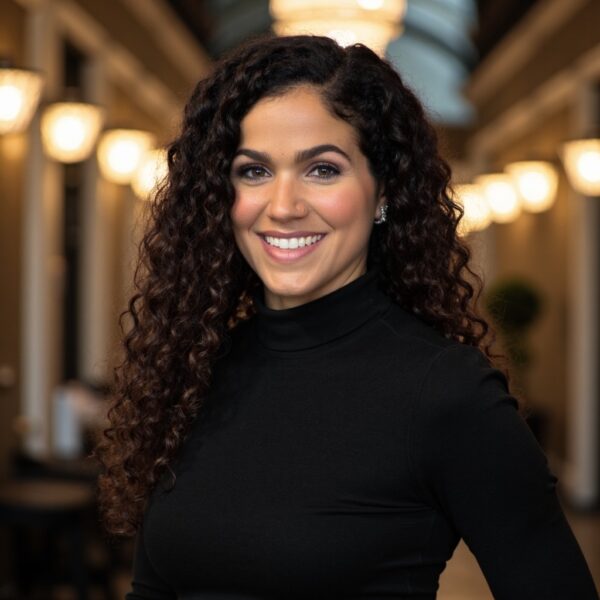
Paula Kramer
Chief Client Officer at aha
Paula oversees end-to-end research operations across the Aha! platform, bringing together smart design, seamless execution, and strong client partnership. She specializes in creating meaningful connections with respondents, even on complex or sensitive topics—to uncover the “why” behind behavior. Passionate about quality and innovation, she blends technology with thoughtful moderation to ensure every project delivers real impact. For Paula, research isn’t a box to check… it’s always game on.